Klondike Gold Rush
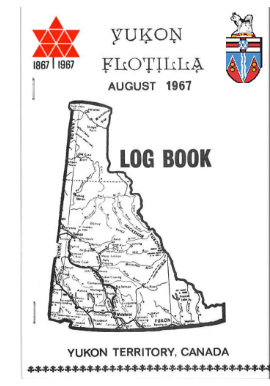
The Yukon River
Dateline: May 27, 2023. Last update: May 27, 2026.
Photographs are all by Ed and Dolores Borreco, from the author's collection.
Click on each to enlarge it in a new window.
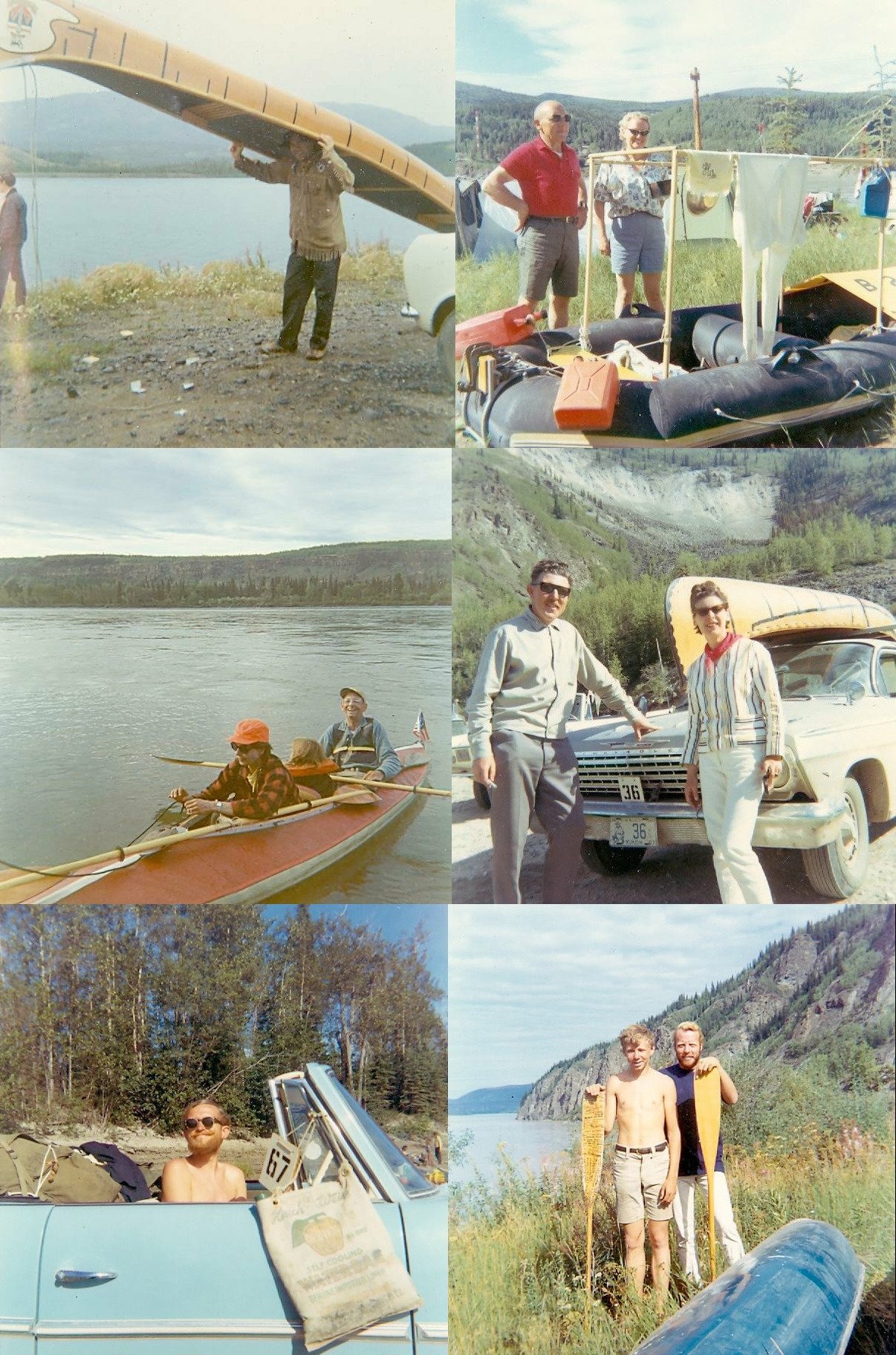
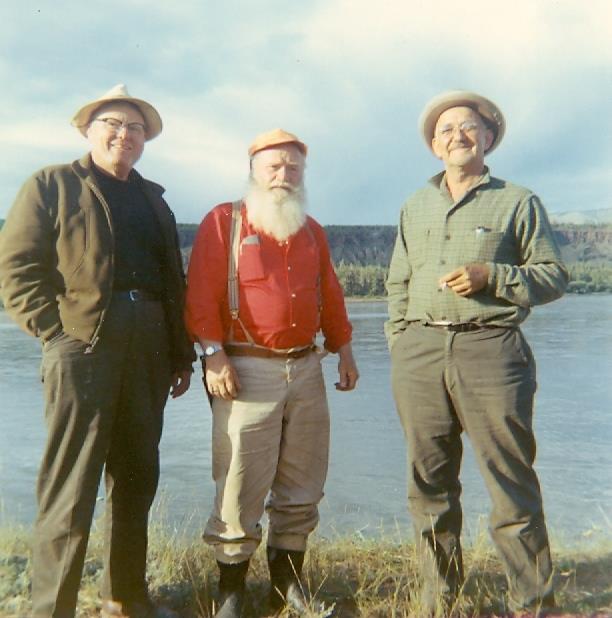
The 1967 Yukon Flotilla was a Canadian Centennial project commemorating the memory of the approximately 30,000 rugged Klondike gold-seekers who sailed down the Yukon River in roughly 7,000 boats from Bennett Lake to Dawson City during the Klondike Gold Rush in 1898.
The Flotilla was a joint project adopted by the Canada Centennial Committee and accepted by the Alaska Centennial Commission. The event was organized and sponsored by The Yukon Fish and Game Association to celebrate Canada's Centennial Year and by The Alaska Centennial Commission to celebrate the Alaska Purchase.[3]
This was a ten-day 460-mile voyage down the Yukon River from Whitehorse to Dawson City in August 1967. Fifty Four craft carried 108 adults, 45 children, and nine dogs for a total of 153 people. This was part of the same route the Gold Rushers took during the Klondike Gold Rush.
Promotion
In January 1967, the organizing committees sent news releases to media outlets announcing the event. These were published in newspapers across the United States and Canada.
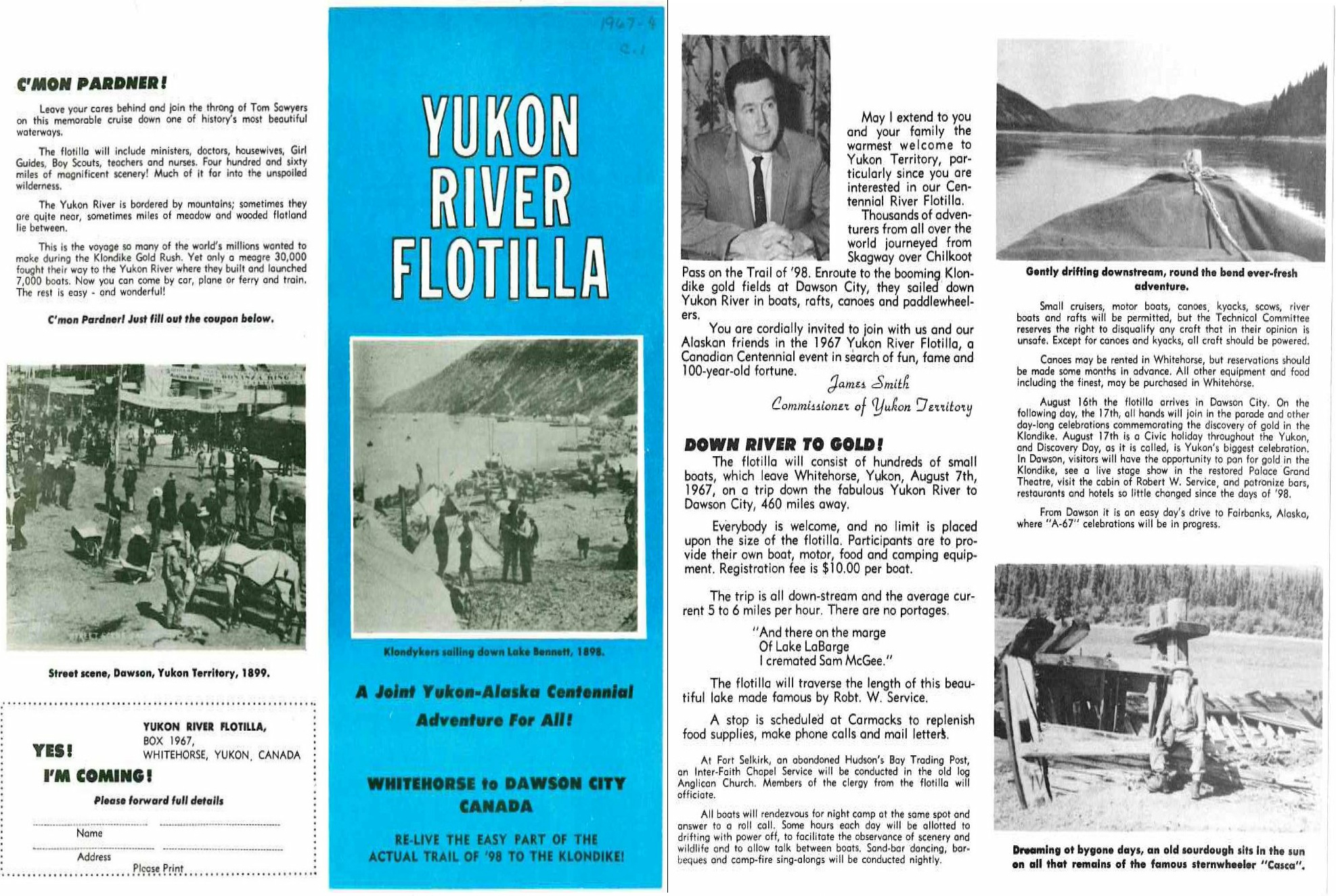
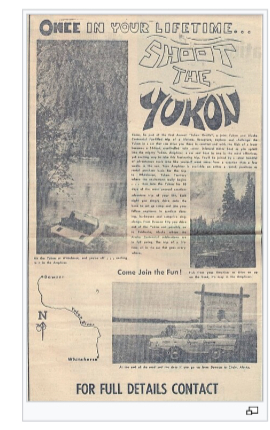 Originally, 20,000 brochures[2] were printed and made ready for distribution. Some were given to The Department of Travel and Publicity to be included in their tourism kits while other copies were distributed through members of The Yukon Fish and Game Association. However, more brochures were needed, eventually a total of 100,000 were distributed with people responding from nearly every State and Province. Additionally, the event gained more publicity through editors of sports magazines, travel magazines, and newspapers throughout Canada and The United States.[1][5]
The Juneau Trades Fair made a booth available to a flotilla representative to hand out brochures and promote the trip. The Canadian Broadcasting Corporation allowed the flotilla a monthly slot which aired short tapes on Trans-Canada Network as well as locally owned stations.[5]
February 1967 Herbert Mclean wrote in Motor Boating Magazine: "Everyone is welcome to join the flotilla which is sponsored by the Yukon Fish and Game Association. Participants must provide their own boats, food and camping equipment. Registration fee is $10." [1]
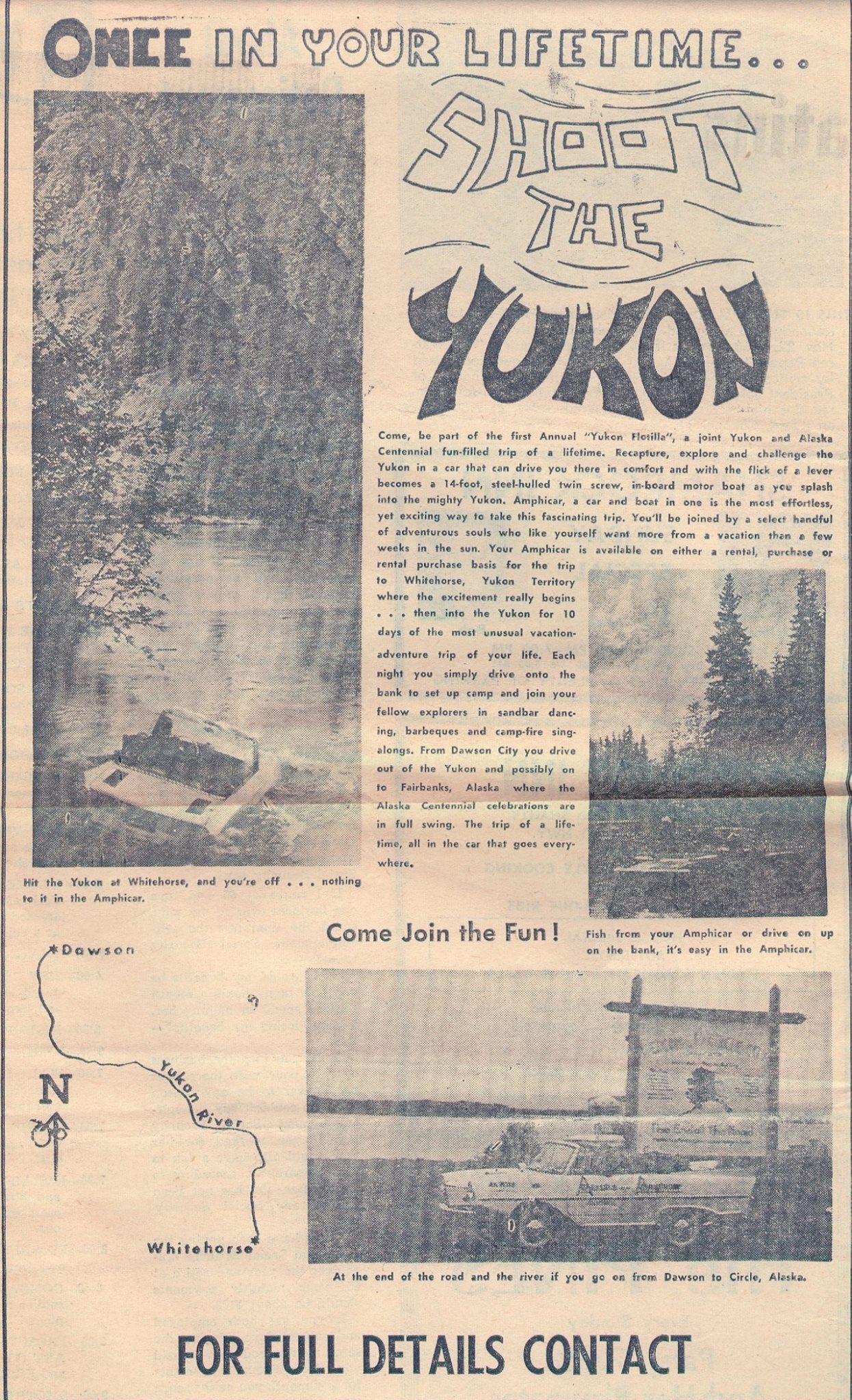
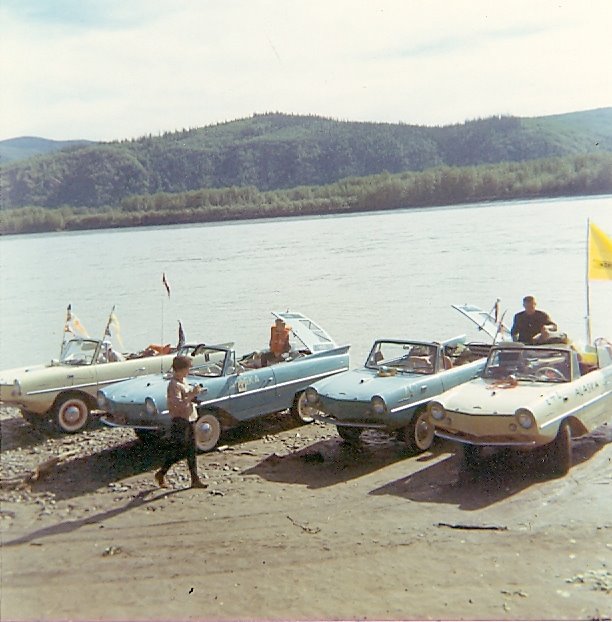
A most unusual promotion called "Shoot the Yukon" (see the ad to the right) was offered from a car dealership in Anchorage, Alaska, where the use of amphibious cars were made available for the trip. Alaska Amphicar, a Division of Fun Products Inc., offered participants the use of a brand-new Amphicar for the trip. They offered new Amphicars for rent, purchase, or a rent-purchase agreement. As a result of this campaign, four Amphicars made the trip with nine occupants originating from Anchorage and Juneau, Alaska.[6] One of the participating Amphicars is known to exist in Washington State.

Event Planning
The Yukon Fish and Game Association set no limit on the number of participating watercraft. The hope was for 200 boats with 500 participants.
They prepared standards for watercraft adhering to Transport Canada regulations. The Royal Canadian Mounted Police (RCMP) was to send boats equipped with radio phones as escorts. A RCMP float plane was scheduled to over-fly the flotilla each day to potentially airlift any injured or sick members.[7]
A complete list of suggested supplies was prepared that included: yarn, thread, mosquito lotion, candles, patches, and other items.
Logistic details for the route had to be addressed. For example, how would the vehicles belonging to participants from Whitehorse get down to Dawson City after the trip? However, this was not an issue for the Amphicars.[4]
Planners needed to make arrangements for depositing fuel drums at fuel stops and firewood at overnight campsites along the way, and portaging options for by-passing dangerous rapids. Also, signage needed to be made and installed directing participants to the campsites, toilets, and other facilities.[5]
Advance Party
There was an advanced party made up of eight members, six were members were from the Royal Canadian Air Force Ground Search Team and two River Masters. This group left a couple of weeks in advance of the flotilla to gauge the river and chart a course. They selected and prepared each overnight campsite. The preparation included: digging of garbage and latrine pits, cut and piled firewood, and erecting signs. They also observed river conditions and identified possible hazards for the trip.[8]
The final destination at Dawson City required additional planning due to another event, Discovery Days, occurring the day following the flotilla's arrival.[9]

Registration
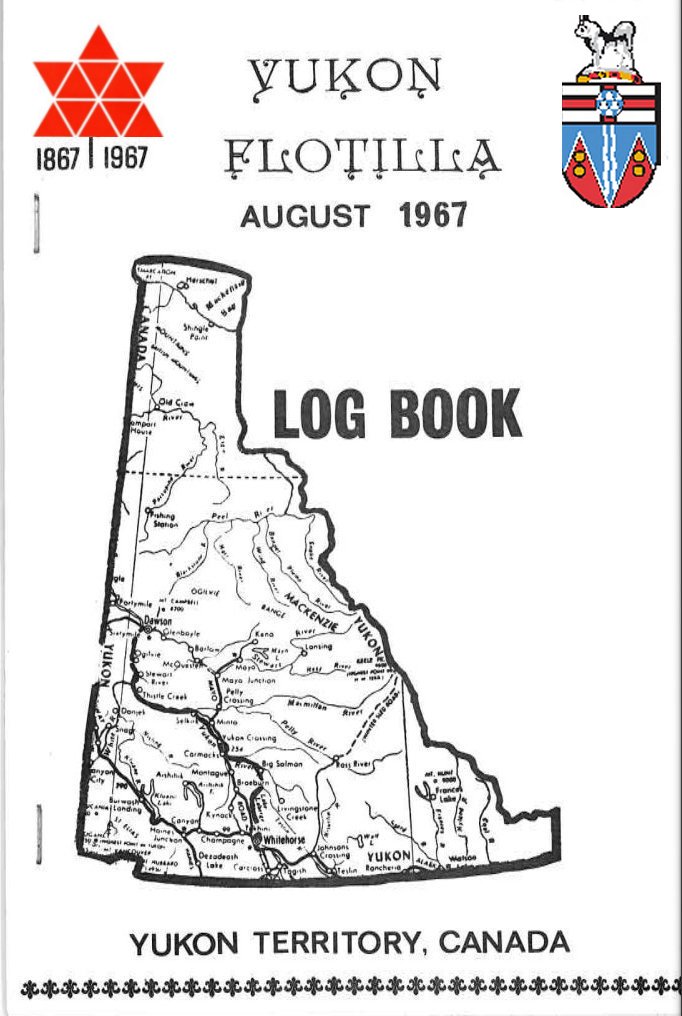
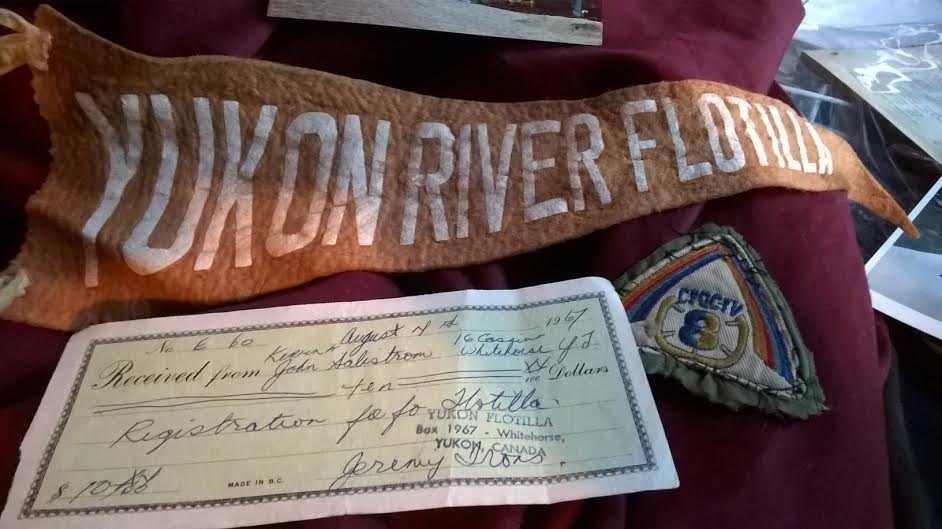
Registering participants was a very complex task that included responding to initial inquiries, registering participants, and collecting fees. Upon paying a registration fee of ten dollars, participants were allocated a registration number categorized by vessel type. Grouping by watercraft type helped with safety measures and regulations. A total of 220 people registered but only 153 participated with 67 no shows.[10] Each participant was given a Logbook and Banner.[11]
Participants
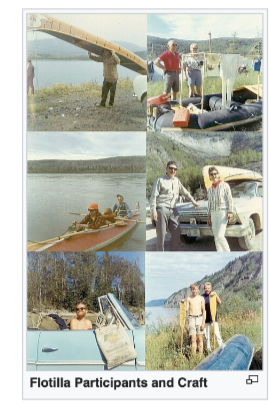
Of the 153 people who participated in the Flotilla there were; 108 adults, 45 children and nine dogs. These participants came from 13 different states, four provinces, and one European country. There were 98 Americans, 54 Canadians, and one Englishman. The adventurers sailed in a total of 54 watercraft.[6]
1 Kayak (Folbot)
2 Rubber rafts
4 Amphicars
4 Inboard motor boats
6 Powered canoes
10 Riverboats
12 Unpowered canoes
15 Outboard motor boats
Pre-departure
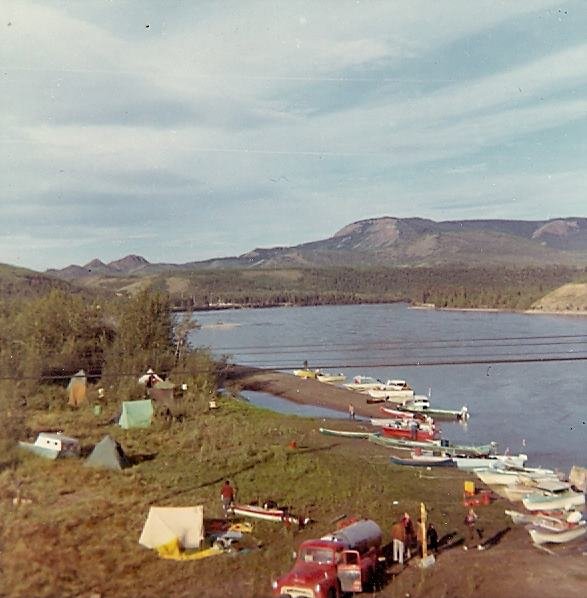
In early July 1967 the flotilla rented an office space from the Yukon Historical Society located in the MacBride Museum in Whitehorse where local arrangements and administration was done. Preparations included: identifying suitable parking areas for vehicles, finding drivers to take participant vehicles to Dawson City, finding a suitable launch site, coordinating with local officials, and responding to inquiries about the flotilla.
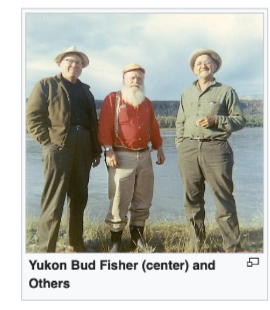
The night before the trip began a meal was served to Flotilla members. This meal provided an opportunity for folks to get acquainted with each other and for safety presentations. A slide show familiarized the participants with the route they would be taking. It was during this supper that Yukon Bud Fisher was named Commodore of the Flotilla.
Most of the flotilla members camped the night before departure in an open area of the Old Shipyard in Whitehorse.[8]
Video of Ed and Dolores Borrecco leaving Anchorage for the drive to Whitehorse, filmed by Maggie Borrecco in August 1967.
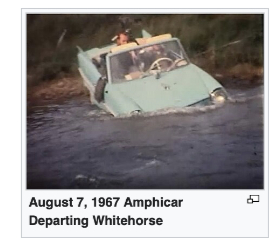
Flotilla Departure
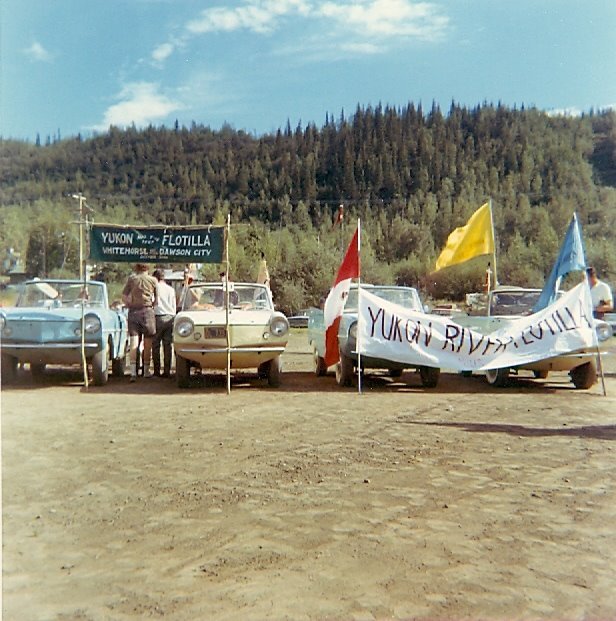
An early departure was planned for 6:00 AM in hopes of avoiding high winds forecast for later in the day on Lake Laberge. The departure directed by the Safety Officer went smoothly. Watercraft were launched by type to avoid the possibility of powered craft "running down" onto unpowered craft like canoes and rafts.[12]
The Canadian Broadcasting Corporation broadcast the departure live on the Trans-Canada Network.
All craft got underway with no serious issues. It was a very colorful display with flags and banners representing all the States, Provinces, and countries of origin which were flying from boats and cars.[11]
Video of the departure, filmed by Ed Borrecco on August 7, 1967.
The Voyage
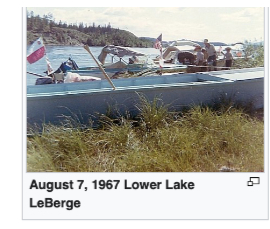
Day 1: Monday August 7, 1967
58 miles
The first day's travel was 58 miles to lower Lake Laberge. The trip was somewhat eventful as a storm came across the lake just as the flotilla began to pass Richthofen Island. One non-powered canoe made it but the others had to be towed. One craft, a Folbot, declined assistance and spent the night on Richthofen Island. The Folbot joined up with group the next day with assistance from RCMP.
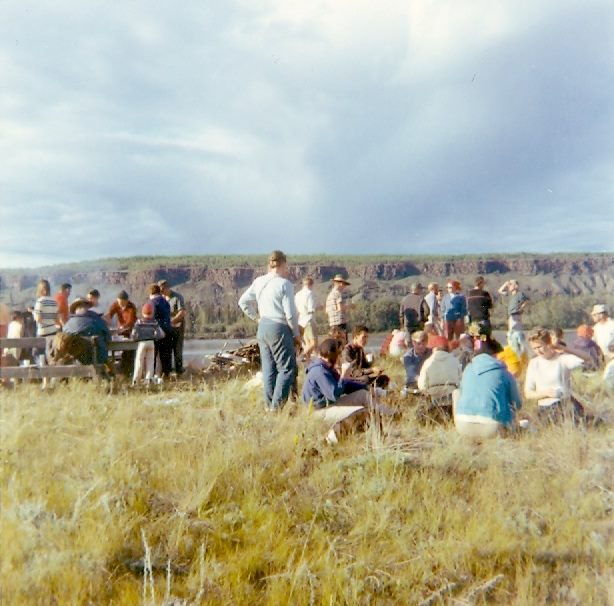
Many members enjoyed their evening meal cooked over a campfire followed by a nice breakfast before departure in the morning to Big Salmon.
Day 2: Tuesday August 8, 1967
65 miles
The 65-mile trip from lower Lake Laberge to Big Salmon was easy going due mostly to a relatively strong current. The ranger banned campfires here due to high winds. This caused a slight hardship for this one evening. Campfires were allowed each night for the rest of the trip.
Day 3: Wednesday August 9, 1967
68 miles

The 68-mile trip from Big Salmon to Carmacks was to a very nice campground. Some folks chose to eat at the hotel and enjoy some of the local food offered there.
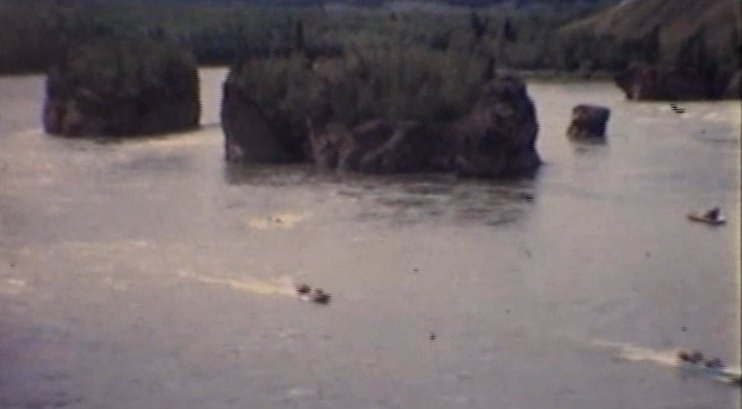
While at Carmacks the Ranger and the RCMP briefed the group on the challenges of passing through Five Finger and Rink Rapids. They advised the group of the correct way to tackle Five Fingers and the safe path through Rink Rapids.
At Carmacks several craft, all the unpowered canoes except one, decided to portage around the Five Finger Rapids. These rapids were notoriously dangerous during the 1898 Klondike Gold Rush. Previous arrangements had been made for excess freight, canoes, and people who chose to be transported (portaged) below the rapids by road.
Video filmed by Ed Borrecco at Carmacks on August 9, 1967
Day: 4 Thursday August 10, 1967
45 miles

The flotilla departed Carmacks for the 45-mile trip to Yukon Crossing, passing through the Five Finger and Rink Rapids.
Five Finger Rapids was the site of many wrecks and deaths during the Klondike Gold Rush, however the passing on this day was uneventful. Most boats, two Amphicars, and one unpowered canoe went through both rapids with ease.
After arriving at the Yukon Crossing, the portaged craft rejoined the flotilla.
This short trip made for an early arrival, allowing travelers to have time to join one another in singing songs around a group campfire.
Video filmed by Ed Borrecco from the portage road above the Five Finger Rapids on August 10, 1967.
Day 5: Friday August 11, 1967
40 miles
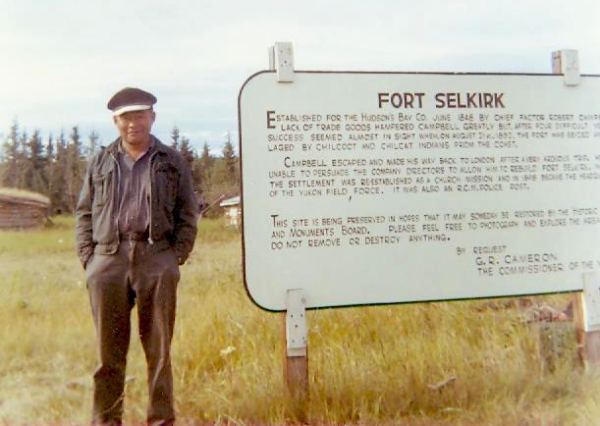
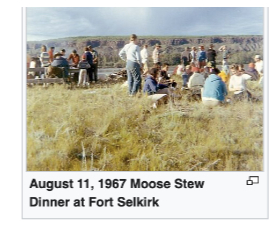 The travelers departed the Yukon Crossing for the 40-mile trip to historic Fort Selkirk with a fuel stop in Minto where the powered vessels topped-off from fuel drums that had been deposited by the organizers.
The residents of Pelly Crossing welcomed the arrival at Fort Selkirk. They traveled back to Fort Selkirk which was as their old home-site. The natives prepared a meal of moose stew and a dessert of rhubarb/custard which was enjoyed by all.
A number of Whitehorse residents from the Canadian Legion and some old Fort Selkirk residents were present and joined the flotilla members for a sing-along by the campfire.
Sadly, one child became ill and was airlifted from the river to the Hospital in Whitehorse.
Video filmed by Ed Borrecco at Fort Selkirk on August 11, 1967.
Day 6: Saturday August 12, 1967
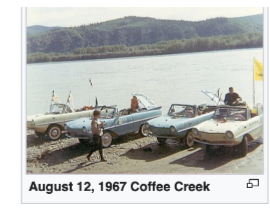 35 miles
Before morning departure from Fort Selkirk for the 35-mile trip to Britannia Creek, the locals served a bacon, sausage, and hotcake breakfast. Since the locals generously provided all meals, it was not necessary for any members to cook at Fort Selkirk.
The campsite at Britannia Creek, however, proved to be unusable so another site ten miles downriver at Coffee Creek was chosen.
They pushed on to Coffee Creek and arrived a little later than scheduled.
Day 7: Sunday August 13, 1967
40 miles
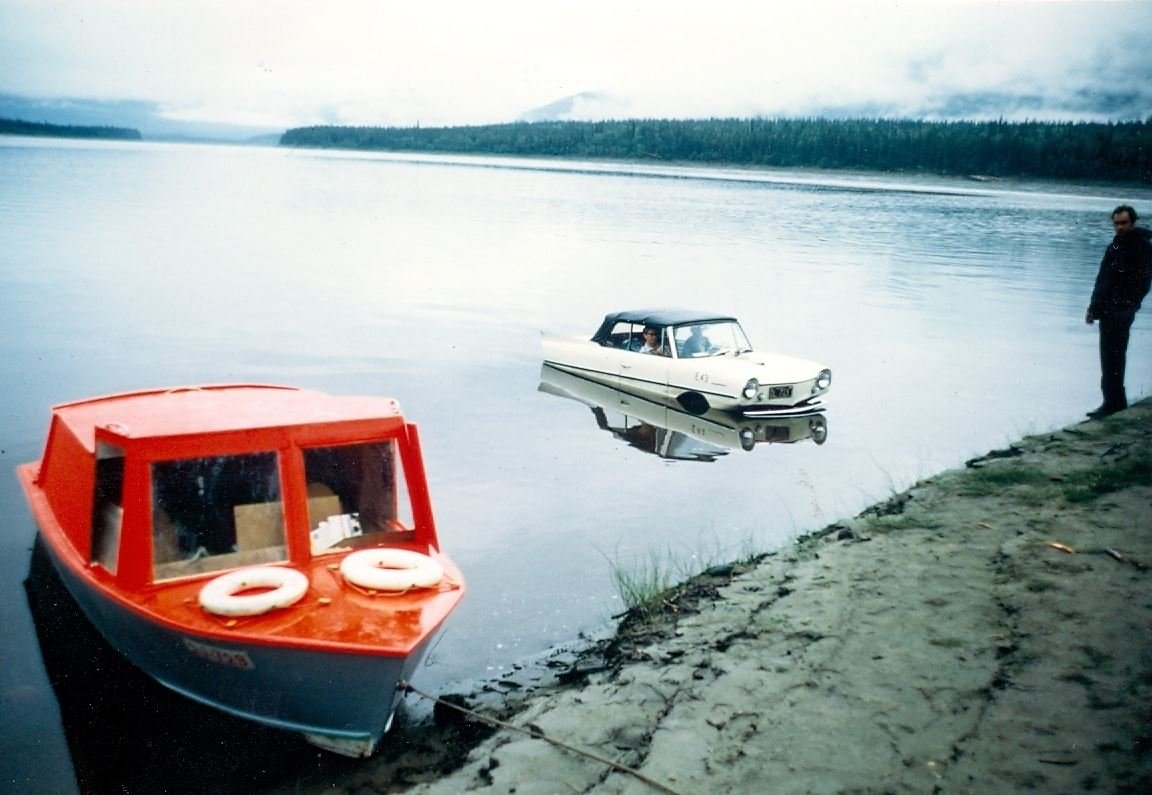
The flotilla departed Coffee Creek for the 40-mile trip to Kirkman Creek. However, the flotilla had to bypass Kirkman Creek because a local resident did not want the influx of people. The flotilla continued on to Thistle Creek to camp for the night. The only mishaps along the way was one of the Amphicars had a flat tire in the river and another had ignition trouble. With no easy riverbank to drive out on, the tire on the Amphicar had to be changed in the water.
Video filmed by Ed Borrecco from an Amphicar floating in the river August 12, 1967.
Day 8: Monday August 14, 1967
38 miles
The group departed Thistle Creek for a 38-mile trip to a settlement at the mouth of the Stewart River. This stretch of river was the most challenging because of many dead-end channels, gravel bars and large rocks.
The arrival at the Stewart River was welcomed by many because there was a store operated by the Burian family where some folks stocked up on items that they were running short of. One local resident provided fresh vegetables to flotilla members.
Day 9: Tuesday August 15, 1967
22 miles
The flotilla members departed Stewart River for the 22-mile trip to Ogilvie. The group decided to bypass Ogilvie and push on to Jim Creek to make the last portion of the trip shorter, resulting in an earlier arrival at Dawson City.
Video filmed by Ed Borrecco cruising down the river in an Amphicar August 15, 1967
Day 10: Wednesday August 16, 1967
49 miles
The group departed Jim Creek for the final 49-mile trip to Dawson. They staggered the departure to allow small slower boats to go first for a planned rendezvous two miles above Dawson City, at Loggers Slough.
Departure from Loggers Slough occurred at 12:30 PM and was sequenced with Flotilla Commodore Yukon Bud Fisher in the lead.[12]
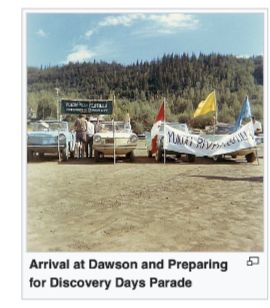
Flotilla arrival at Dawson City
Arrival at Dawson occurred at about 1 PM and was met with a cheering crowd of people waving flags, blowing horns, and whistles.
Some flotilla members were transported to a campsite area at the old hospital grounds while the Amphicars travelers drove themselves. This is where toilets, fresh water and other facilities were provided. Moose burgers were served by the Kiwanis Club. Some folks were grateful that their vehicles had been repositioned from Whitehorse to Dawson by volunteers who drove them the over 500 km distance.
Many members remained in Dawson to participate in the Discovery Day celebration the following day. The flotilla sponsored a float that was in the parade with four Amphicars following.[6]
Video filmed by Ed Borrecco during the Discovery Days Parade August 17, 1967
Continuing downstream to Eagle Alaska
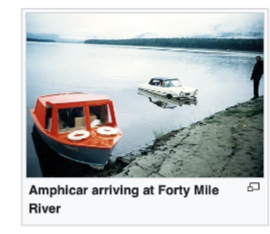
One craft, an Amphicar, continued further downstream to Eagle, AK. During the trip, they encountered another craft that was cruising from Dawson to St. Michael, Alaska. Onboard this boat was Dawson forest ranger Joe Langevin along with one other traveler. After about 60 miles the ranger noticed a car over on the river bank and wondered how it got there. The two realized it was an amphibious car that sailed with the flotilla from Whitehorse to Dawson and continued on. The two craft traveled together for the first one hundred miles, passing each other back and forth, eventually meeting up for coffee at The Fortymile River. The group continued on together arriving at Eagle where the Amphicar found a boat ramp and exited the river. The Amphicar occupants then traveled by road to their home in Anchorage.
Forest ranger Langevin and his companion continued on downstream to the mouth of the Yukon River at the Yukon-Kuskokwim Delta where it empties into the Bering Sea. They then traveled north in the Bering Sea to their destination of St. Michael. [14]
Audio clip of an interview with the Dawson forest ranger by by Athol Retallack.
Review
The 1967 Yukon River Flotilla was a tremendous success due in part to the cooperation of participating individuals, government agencies, military units, service clubs, newspaper publishers, radio/TV broadcasters, and private businesses. The event made for a large amount of exposure and notoriety for the Yukon Territory and Alaska.
Radio man and storyteller Les McLaughlin said in a 1977 broadcast on CKRW's Yukon Nuggets program: "Canada's centennial year, 1967, was an exciting time in the Yukon. There were all kinds of celebrations and projects. Unnamed mountains were being climbed. The Yukon River flotilla saw boats of every description heading from Whitehorse to Dawson. Most of the events were huge successes."
Acknowledgments
Route Map
Click on the map (created by Kevin P. Kearney) to open an interactive version in a new window.

More Photos
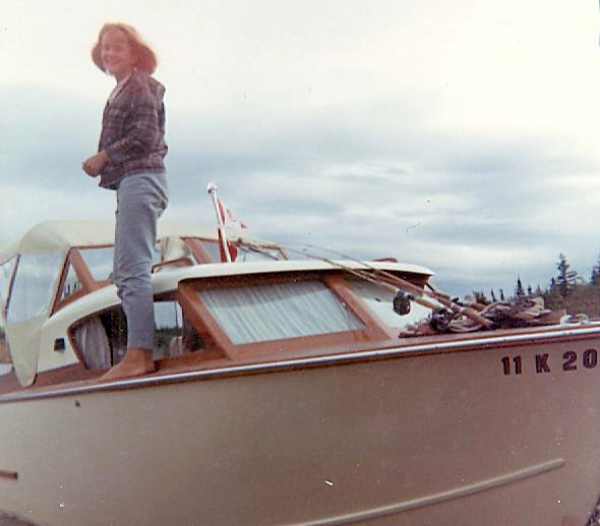
Danny Roberts, the only inhabitant of Fort Selkirk.
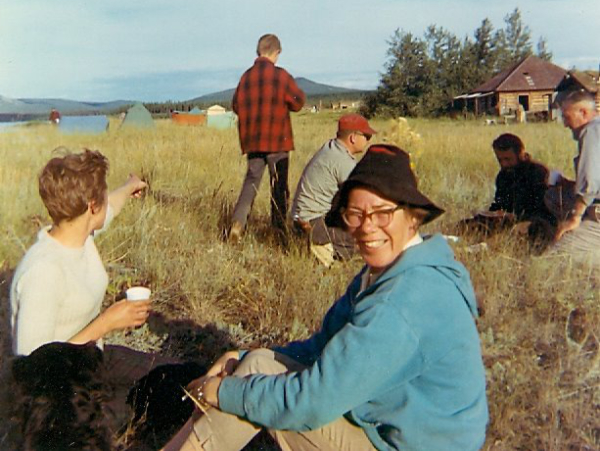
Resting at Fort Selkirk.

Nora Corbett of Whitehorse acted as the entertainment chairman. Photo taken at Fort Selkirk.
Ranger Fred Stretch of the Yukon Forest Service was the Safety Officer for the Flotilla.

Susan Afford of Salmon Arm, B.C.
References
Prime reference #1: Derek Irons - Yukon River Flotilla Report, August 1967. Yukon Archives PAM 1967-0002 (pdf, 16 pages). Other viewing options.
Prime reference #2: Yukon Fish and Game Association - Yukon River Flotilla Log Book, August 1967 (pdf, 37 pages). Other viewing options.
1. McLean, Herbert E. (February 1967). "Alaska's Boating Centennial". Motor Boating and Sailing 1967-02: Vol 119 Iss 2. Bonnier Corporation. pp. 62-63.
2. Yukon River Flotilla Brochure, August 1967. Yukon Archives PAM 1967-0004.
3. Yukon Fish and Game Association. Yukon River Flotilla Log Book August 1967. pp. 4-6.
4. Les McLaughlin. Yukon River Flotilla, August 1967.
5. Derek Irons. Yukon River Flotilla Report, August 1967. p. 2.
6. Derek Irons. Yukon River Flotilla Report, August 1967. p. 4.
7. Les McLaughlin. Yukon River Flotilla, August 1967. p. 2.
8. Derek Irons. Yukon River Flotilla Report, August 1967. p. 3.
9. Les McLaughlin. Yukon River Flotilla, August 1967. p. 3.
10. Derek Irons. Yukon River Flotilla Report, August 1967. p. 6.
11. Firth, John (2004). River Time: Racing the Ghosts of the Klondike Rush. NeWest Press. p. 132-133. ISBN 1-896300-66-9.
12. Derek Irons. Yukon River Flotilla Report, August 1967. pp. 4-6.
13. Derek Irons. Yukon River Flotilla Report, August 1967. p. 7.
14. Yukon River Flotilla 1967 Radio Broadcast Audio - interview with Joe Langevin by Athol Retallack (33 minutes). Yukon Archives file, retrieved 2023-05-16.